Hey everyone, Plastic Crate
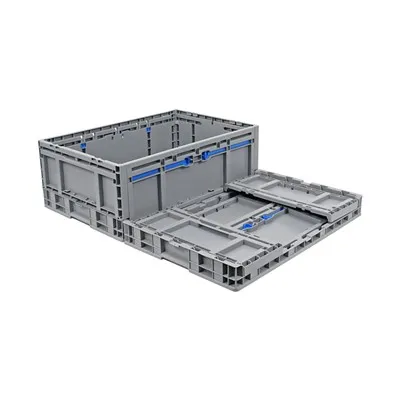
If you’ve ever stared at a stack of plastic crates at the grocery store, a warehouse, or even your cousin’s garage sale and thought “how much can these actually hold?” — same. I’ve been selling plastic crates for over 7 years now, and this is still the question that pops up most when first-time buyers hit my DMs or swing by my shop. Most people don’t realize it’s not a one-size-fits-all number, and if you get it wrong? Well, you’re either left with a stack of broken crates (and a mess to clean up) or wasting money on ones way too heavy for your needs.
Let me break this down like I would for a regular customer, no fancy math jargon (or at least, I’ll explain the simple parts so you don’t zone out). First off, I always tell people to stop thinking of plastic crates like a paper box or a flimsy cardboard bin. These aren’t for moving your old college textbooks (though some sturdy ones work great for that); they’re engineered for repeated use, so their weight limit depends on a bunch of actual, practical factors that I see play out every single week with orders.
First up: the type of plastic we use. 99% of the crates I supply are made from two materials: HDPE (high-density polyethylene) and sometimes PP (polypropylene) for extra heavy-duty stuff. I don’t touch cheap, brittle plastic that cracks if you look at it wrong — that’s a nightmare for everyone involved. HDPE is the workhorse here. It’s flexible, impact-resistant, and has a natural tensile strength (that’s just the science term for how much it can stretch before breaking) that makes it perfect for crates. PP is stiffer, so if you’re stacking crates super high, that’s the one you want. A basic HDPE crate you’d use for storing produce in a grocery store? It’ll hold around 50-70 lbs when full. But wait — that’s just the load inside, right?
Next big one: the design. Not all crates are built the same. A small, open-top crate for carrying milk crates (wait, no, wait — I mean small open crates for holding 2-liter soda bottles) has a thinner wall and smaller base, so its max load is lower than a big, closed or semi-closed pallet crate you use for shipping pallets. The ribbing on the sides? That’s not just for looks. Those little ridges add structural support. A crate with extra cross-ribs on the bottom can hold way more than one with a flat, thin base. I had a customer last year who ordered 50 crates for his hardware store to hold bags of nails and screws. He tried using the cheap open crates first, and two broke mid-shift when he stacked them 6 high. We swapped him for our heavy-duty ribbed PP crates, and those same 6 stacks worked no problem. Those ones hit around 250-300 lbs per crate. Crazy, right?
Then there’s the stacking limit. This is the part most people miss entirely. A crate’s internal load (the stuff you put inside) is different from how much weight it can hold when you stack another crate on top. If you stack crates, every top crate adds its own weight to the ones below. So if you have a full 70-lb crate on the bottom, stacking another full 70-lb crate on top means the bottom one is holding 140 lbs total, not just 70. I always tell people to leave a 20-30% buffer for stacking, especially if you’re using them in a warehouse where they’ll be on a pallet jack for hours. I had a bakery client a while back who stacked their crates of bread dough 10 high. They wanted standard crates, and I told them standard can only go up to 8 high max for their safety. They ignored me, went for 10, and by the third day, the bottom two crates cracked, ruining $2k worth of dough. Ouch. That’s the kind of mistake you can avoid if you just ask the right questions.
Wait, what about things like temperature? Oh, that’s a big one too. Plastic changes with heat and cold, no matter what people say. If you’re using crates in a freezer (like for storing frozen food), the plastic gets a little more brittle, so their weight limit drops by about 10-15%. I learned that the hard way early on — I supplied a restaurant with standard HDPE crates for their walk-in freezer, and they broke within a month. Swapped them for freezer-grade HDPE, and now those same crates have held up for 2 years straight. On the flip side, if you’re using crates outdoors in 90°F heat? HDPE stays pretty stable, but if it’s a thin-gauge crate, the slight softness means it can’t hold as much as it would in room temp. I never recommend using crates for hot food storage, but if you do, just bump up the gauge a size.
Let’s get into some real numbers, no fluff, so you have a sense of what’s what, based on the crates I supply most often. Keep in mind these are for room temp, non-stacking or up to 4 stacks max, standard use:
- Basic open HDPE crates (produce, small parts): 50-70 lbs. Perfect for grocery runs, organizing your garage, or moving small boxes. I sell a ton of these to people clearing out their attics.
- Medium-duty closed-top crates (shipping small goods, retail inventory): 100-150 lbs. These are my best-sellers for small businesses. You can stack these 3 high no problem without issues.
- Heavy-duty ribbed PP crates (warehouse, bulk goods, hardware): 200-300 lbs. I recommend these for anyone moving or storing heavy stuff. They’re a little more expensive, but worth every penny because they last 5+ years instead of 1 or 2.
- Freezer/heat-resistant crates: these are usually marked specifically for that use, so their limits are adjusted. Freezer ones are 40-60 lbs (since the material is thicker to handle cold), heat-resistant ones are 80-120 lbs.
Now, why does this matter beyond just not breaking crates? Let’s talk real costs. A customer once told me he tried saving $50 total by buying cheap crates that held 10 lbs less each. Within 2 weeks, 12 crates broke, he had to replace $300 worth of inventory, and he had to pay a guy to clean up the mess. The extra $50 he saved cost him over $500. That’s not a win. And on the flip side, buying crates that are way too heavy for your needs is just wasting money. I had a guy order 20 heavy-duty 300-lb crates to hold kids’ toys for his playroom. He told me later he used 10-lb ones for half the toys and saved $120. Dude, I get it — no one wants to overspend, but you just have to match the crate to the job.
Wait, can you test a crate before buying? Absolutely. I always tell new customers to ask for a sample. We send free samples (just cover shipping, it’s worth it) so you can feel the thickness, check the ribbing, even do a quick test: put a 50-lb weight in a basic crate, see if it flexes more than it should. If it wobbles too much when you lift it, that’s a sign it’s not for heavy loads. I had a retail client who ordered samples, and he told me the first sample I sent was too flimsy, so I swapped him for a medium-duty one, and that worked perfectly for his inventory of t-shirts and socks. No surprises, no headaches.
Also, a quick note on wear and tear over time. Plastic crates don’t last forever, even if they’re good quality. If you’re using them daily, dragging them over concrete, dropping them, leaving them out in the sun? Their strength drops a little each year. After 5-7 years, even a good heavy-duty crate might only hold 80% of its original limit. So if you’re reusing old crates, don’t trust the number from 2 years ago — check for cracks, thin spots, or faded plastic (fading usually means UV damage from sun, which weakens it). I always advise businesses to rotate out old crates every 5 years to avoid that risk.
Let me wrap this up with the biggest takeaways, since I know some of you skipped to the end:
- There’s no universal “max weight” — it depends on plastic type, design, stacking, temperature, and wear.
- Don’t guess. Ask a supplier (that’s me!) for the specs, or test a sample.
- Buffers are your friend. Leave extra weight room for stacking, cold, or heavy items.
- Cheap crates end up costing more. Invest in the right one for your use, not the cheapest one on Amazon.

If you’re not sure which crate you need — whether you’re a small business restocking inventory, a warehouse owner needing bulk crates, or even a homeowner organizing a move — hit me up for a chat. I don’t push the most expensive option; I tell you exactly what will work for your budget and your needs. No pressure, just real advice from someone who’s been in this game long enough to know the difference between a good crate and a garbage one.
Automated Storage and Retrieval System Containers References:
- American Society for Testing and Materials. Standard Test Method for Tensile Properties of Plastic Materials.
- Association of American Railroads. Plastic Container Performance Specifications for Intermodal Shipping.
- Food and Drug Administration. Compliance Policy Guide for Plastic Materials in Food Processing and Storage.
- Plastic Industry Association. Design and Performance Guidelines for Industrial Plastic Containers.
Shanghai Qusheng Plastics Co., Ltd.
As one of the leading plastic crate manufacturers and suppliers in China, we have world-leading production equipment and strong manufacturing capabilities. Please rest assured to wholesale customized plastic crate from our factory. For quotation, contact us now.
Address: No.85 Hengtang Road, Huaqiao Town, Kunshan City, Jiangsu Province
E-mail: Totepallet-inquiry@plastic-crate.com
WebSite: https://www.totepallet.com/
