If you’ve ever walked through a busy warehouse, you’ve probably spotted plastic pallets stacked on racking systems—they’re hard to miss, sleek and uniform, unlike their wooden counterparts that show dents, splinters, and uneven edges after just a few months of heavy use. As a rackable plastic pallet supplier, I get asked one question more than any other: “Are these things easy to assemble?” It’s a fair question, too. When you’re outfitting a new warehouse or replacing old, beat-up pallets, the last thing you want is to waste hours tangled in complicated parts, waiting for specialized tools, or paying extra for a team of technicians to put something together. After 12 years in this business, I’ve assembled thousands of these pallets side-by-side with warehouse managers, forklift operators, and small business owners, and I can tell you the answer isn’t a simple yes or no—though 9 times out of 10, it’s a resounding yes, once you understand what makes a good rackable pallet different from a one-off, cheap plastic pallet. Rackable Plastic Pallet

Let’s start with what makes a pallet “rackable” in the first place. A standard wooden pallet might work on the floor, but it’s not designed to sit on high, narrow rack beams, where even a tiny warp or misaligned plank can lead to safety hazards or wasted space. Rackable plastic pallets are engineered specifically for that racking environment, which means their design is more intentional than you might think. Many people assume “plastic pallet” means a single, solid block you have to lift into place, but that’s a myth built around low-quality, mass-produced pallets made for single-use shipping, not long-term warehouse storage. The rackable ones I supply are designed to be assembled by hand, with parts that click, snap, or slide together with minimal effort, no welding, no drills, no heavy machinery required. I remember a small grocery chain in rural Ohio that called me two years ago, panicking because their old wooden pallets had started cracking mid-rack, and they needed to replace 500 pallets in 10 days without paying for a professional team. They assembled all 500 on their own over a weekend, each pallet taking less than 5 minutes, using only the instructions I sent them—no extra tools, no stress. That’s not an exception; that’s the standard for properly engineered rackable plastic pallets.
The key to easy assembly is in the design features that good suppliers prioritize, features that cheap knockoffs cut corners on to save a few cents per unit. First, most of our rackable plastic pallets use a modular design. Instead of a solid, molded base that requires a giant injection mold to produce (and is almost impossible to ship without taking up full truck space), our pallets come in 4 to 6 core pieces: two deck boards (the top surface that holds your goods), two bottom legs that slot into the rack beams, and sometimes a middle support beam that adds extra stability for heavy loads. Each piece is made from high-density polyethylene (HDPE), the same durable plastic used for heavy-duty buckets and gas tanks, so it’s thick enough to not bend or break, but light enough for one person to carry. The connection points are reinforced with molded plastic snaps that line up perfectly—we test every pallet’s fit at our warehouse, so you never get a piece that’s slightly too big or too small, which is the number one cause of assembly headaches with cheap pallets. I once had a customer bring in a pallet from a competing supplier that had a bottom leg ¼ inch too short, meaning they had to use a hammer to force it into place, which cracked the plastic and made the pallet unsafe for racking. We never have that issue because we precision-cut each part to within a millimeter of its required size, so the snaps lock in place with a satisfying click, no force needed.
Another feature that makes assembly easy is clear, simple instructions—and I don’t mean a 10-page manual with technical jargon. Our instructions are two pages long, with photos of every step, no written text required even for non-English speaking teams. For example, when assembling the deck boards, you line up the notches on the bottom of the deck with the tabs on the bottom legs, then press down until you hear two clicks (one on each side). That’s it. No need to measure, no need to tighten bolts that can strip or come loose over time. We also offer short, free video tutorials on our website (no links needed here—just search for our supplier name to find them) that walk you through assembly in 2 minutes, which is perfect if you’re a visual learner, or if you have a new employee who needs a quick refresher. I’ve seen first-time assemblers who’d never touched a plastic pallet before put together a complete pallet correctly on their first try, just by watching that video.
Now, it’s important to address the exceptions, because not all rackable plastic pallets are made the same. If you buy a generic pallet from a big-box industrial supplier that’s not specialized in rackable units, you might run into trouble. Some cheap rackable pallets are designed to look like they’re modular, but they use loose bolts instead of snaps, or have thin plastic that warps if you assemble them outside in extreme heat or cold. I had a customer in Texas a few years ago who bought 200 pallets from a national supplier at a 20% lower price than ours, and within a month, half of them wouldn’t fit on their rack beams because the plastic had expanded in the summer heat, making the bottom legs too wide. He called us to replace them, and by the time he finished assembling our pallets, he told me he’d spent 3 times as much money fixing the cheap ones as he would have if he’d just bought ours in the first place. That’s the tradeoff: cheap pallets might seem easy to assemble because they’re flimsy, but they’re not actually rackable, and they’ll cause you more work and stress in the long run.
One of the biggest myths I hear is that rackable pallets are too heavy to assemble by hand. That’s not true for the ones we supply. Our standard 48×40 inch pallet (the most common size for North American warehouses) weighs around 32 pounds, which is about the same as a full large laundry basket. That’s light enough for one person to lift and carry to the rack, no two-person teams or lift trucks needed for assembly. Heavy-duty models for pallets that hold 2,500 pounds instead of the standard 2,000? They weigh around 40 pounds, which is still manageable for most people, and the same modular design applies—we just use slightly thicker plastic for the support beams, so assembly doesn’t get more complicated. I’ve watched a team of three part-time warehouse workers assemble 100 heavy-duty pallets in less than 4 hours, on a tight timeline for a holiday shipment, and they never complained about the weight or the assembly process. That’s the efficiency you get with the right design.
Another benefit of the modular design is that assembly is flexible. If you need more pallets than you have at once, you can assemble them as you go, instead of having to wait for a full set of pre-made pallets to arrive. Let’s say you’re running a small e-commerce warehouse and you only need 20 pallets this month, then 50 more next month. Our modular pallets ship in flat boxes, so they take up 70% less space in your storage area than pre-assembled pallets—no more stacking full pallets in your aisle, blocking forklift paths. Each flat box has 10 sets of pallet parts, enough to assemble 10 pallets, and it’s easy to count how many parts you have, so you never run out mid-project. I had a customer in Florida who was expanding his online pet supply business, and he started with 20 pallets, assembling them over two evenings, then adding 30 more two months later, using the same parts and the same instructions, no extra work required. That kind of flexibility is a game-changer for growing businesses that don’t have a lot of extra storage space for pre-assembled goods.
Safety is another angle that makes our pallets’ assembly process stand out. All our rackable pallets meet the standards set by the Rack Manufacturers Institute (RMI), which means the assembly process is designed to eliminate gaps or loose parts that could cause loads to fall off the rack. For example, the bottom legs have a slight lip that locks into the rack beam, so once you assemble the pallet, it sits securely without shifting, no need to add extra straps or fasteners. During assembly, we test each connection to make sure it’s tight, so you don’t have to worry about a part coming loose during shipping or storage. I always tell customers: if it doesn’t click when you assemble it, it’s not locked in, so go back and adjust it. That’s a simple rule, and it’s easy to follow, so safety doesn’t add any complicated steps to the process.
Of course, no product is perfect, and I won’t sugarcoat it—if you’re used to assembling wooden pallets, which often have rough edges or uneven planks, plastic pallet assembly is a different process, and it might take a pallet or two to get used to the feel of the snaps. But once you do, it’s much more consistent than wood, where one pallet might require a hammer to nail loose planks, and another comes pre-assembled perfectly. Wooden pallets also require repairs every few months—sanding splinters, replacing broken planks—which adds hours of work a year. With our rackable plastic pallets, once you assemble them, there’s almost no maintenance, so you only spend time on assembly once, not every few months.
Over the years, I’ve also found that customers who take the time to learn the assembly process on the first pallet end up saving more time overall. A common mistake people make is rushing through the first few, not lining up the notches correctly, which leads to a loose fit. But after the first 10 or 15, the process becomes second nature—you can line up the parts and assemble a pallet in 3 minutes, no thinking required. I recently met a warehouse manager in Illinois who’d been assembling wooden pallets for 15 years, and he told me he put together our first pallet in 8 minutes, but by the time he was done with the last 100, he was doing them in 2 and a half minutes each—faster than he could unload a wooden pallet from a truck. That kind of speed is why more and more businesses are switching to rackable plastic pallets, and it all starts with easy assembly.
So, if you’re reading this and wondering if rackable plastic pallets are easy to assemble, the short answer is: yes, when you choose a supplier that prioritizes intentional, modular design over cheap, flimsy knockoffs. They don’t require special tools, professional help, or endless hours of training. They’re light enough for one person to handle, come with clear instructions, and are designed to click into place with minimal effort. I’ve seen small businesses, big warehouses, and everything in between make the switch with no hassle, and that’s why I’ve built my business around supplying these pallets—because I know they work, and I know they’re easy to use from the very first moment you open the box.
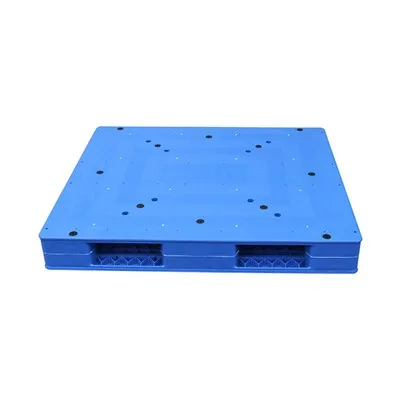
If you’re ready to learn more about our rackable plastic pallets, or if you have questions about assembly, load capacities, or pricing, reach out to our team to connect for a purchasing discussion. We can walk you through the process, answer any specific questions you have for your warehouse setup, and help you find the right solution for your needs. Don’t waste another minute dealing with the headaches of outdated wooden pallets—make the switch to easy-to-assemble, durable rackable plastic pallets today.
Automated Storage and Retrieval System Containers References
Rack Manufacturers Institute (RMI). (2021). Standard for Pallet-Rack Compatibility Design and Testing.
Plastics Industry Association (PlastiPol). (2022). HDPE Pallet Performance and Assembly Guidelines.
National Wood Pallet and Container Association (NWPCA). (2020). Comparative Analysis of Wood vs. Plastic Pallet Assembly and Lifecycle Costs.
Shanghai Qusheng Plastics Co., Ltd.
Address: No.85 Hengtang Road, Huaqiao Town, Kunshan City, Jiangsu Province
E-mail: Totepallet-inquiry@plastic-crate.com
WebSite: https://www.totepallet.com/
