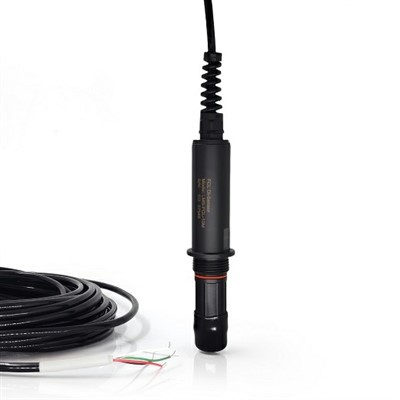
As a supplier of ultrasonic level meters, I’ve encountered numerous inquiries regarding the materials used in the transducers of these devices. The transducer is the heart of an ultrasonic level meter, responsible for transmitting and receiving ultrasonic waves to measure the distance from the meter to the surface of a liquid or solid. Understanding the material of the transducer is crucial for selecting the right ultrasonic level meter for specific applications. Ultrasonic Level Meter
Piezoelectric Ceramics: The Most Common Choice
The most widely used material for ultrasonic level meter transducers is piezoelectric ceramics. These ceramics possess a unique property known as the piezoelectric effect. When an electric field is applied to a piezoelectric ceramic, it changes shape, generating ultrasonic waves. Conversely, when ultrasonic waves hit the ceramic, it produces an electric charge, which can be detected and processed by the level meter.
One of the most popular piezoelectric ceramics used in ultrasonic level meters is lead zirconate titanate (PZT). PZT offers several advantages that make it ideal for this application. Firstly, it has a high piezoelectric coefficient, which means it can efficiently convert electrical energy into mechanical energy (ultrasonic waves) and vice versa. This high efficiency results in better signal strength and sensitivity, allowing the ultrasonic level meter to accurately measure levels even in challenging environments.
Secondly, PZT has a wide operating temperature range. It can withstand temperatures from -40°C to 150°C, making it suitable for a variety of industrial applications, from cold storage facilities to high-temperature chemical processing plants. Additionally, PZT is relatively stable over time, ensuring consistent performance of the ultrasonic level meter throughout its lifespan.
Another advantage of using PZT in ultrasonic level meter transducers is its mechanical strength. It can withstand the mechanical stresses associated with ultrasonic wave generation and propagation, as well as the physical vibrations and shocks that may occur in industrial settings. This durability ensures the long-term reliability of the ultrasonic level meter, reducing maintenance costs and downtime for users.
Polyvinylidene Fluoride (PVDF): A Flexible Alternative
In some applications, piezoelectric ceramics may not be the best choice. For example, in applications where flexibility is required, such as in measuring the level of liquids in flexible containers or in curved tanks, polyvinylidene fluoride (PVDF) can be a suitable alternative.
PVDF is a piezoelectric polymer that offers several unique properties. Unlike piezoelectric ceramics, PVDF is flexible and can be easily fabricated into various shapes, including thin films. This flexibility allows it to be used in applications where traditional rigid transducers cannot be installed.
In addition to its flexibility, PVDF has a high sensitivity to ultrasonic waves, especially in the low-frequency range. This makes it suitable for applications where low-frequency ultrasonic waves are required, such as in measuring the level of viscous liquids or in applications where the ultrasonic waves need to penetrate through a thick layer of material.
However, PVDF also has some limitations compared to piezoelectric ceramics. It has a lower piezoelectric coefficient, which means it is less efficient in converting electrical energy into mechanical energy. This can result in weaker signal strength and lower measurement accuracy, especially in applications where the distance between the transducer and the target surface is large.
Single Crystals: High-Performance Option
For high-performance applications that require the highest level of accuracy and sensitivity, single crystals can be used as the material for ultrasonic level meter transducers. Single crystals, such as lithium niobate (LiNbO₃) and langasite (La₃Ga₅SiO₁₄), offer several advantages over piezoelectric ceramics and polymers.
One of the main advantages of single crystals is their high piezoelectric coefficient, which is significantly higher than that of PZT. This results in much stronger ultrasonic waves and better signal-to-noise ratio, allowing for more accurate and reliable level measurements.
Single crystals also have a higher electromechanical coupling factor, which means they can more efficiently convert electrical energy into mechanical energy and vice versa. This leads to higher energy efficiency and lower power consumption of the ultrasonic level meter.
In addition, single crystals have a wide operating temperature range and excellent thermal stability. They can maintain their piezoelectric properties even at high temperatures, making them suitable for applications in extreme environments.
However, single crystals are more expensive and difficult to manufacture compared to piezoelectric ceramics and polymers. This makes them less commonly used in general industrial applications, and they are typically reserved for high-end applications where the performance requirements are extremely high.
Considerations for Material Selection
When selecting the material for the transducer in an ultrasonic level meter, several factors need to be considered. The first factor is the application environment. If the application involves high temperatures, high pressures, or corrosive substances, a material with high temperature resistance, pressure resistance, and chemical resistance, such as PZT, may be required.
The second factor is the measurement requirements. If high accuracy and sensitivity are required, a material with a high piezoelectric coefficient and electromechanical coupling factor, such as single crystals, may be the best choice. On the other hand, if flexibility is required, PVDF may be more suitable.
The third factor is the cost. Piezoelectric ceramics are generally the most cost-effective option, while single crystals are the most expensive. The choice of material should be based on a balance between performance and cost.
Conclusion
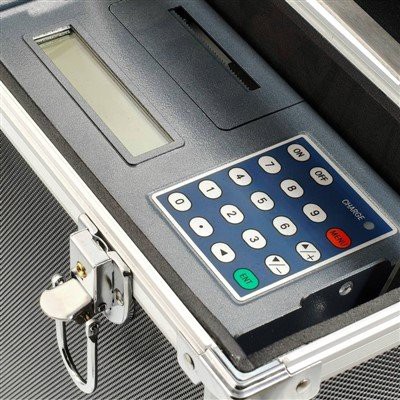
In conclusion, the material of the transducer in an ultrasonic level meter plays a crucial role in determining its performance and suitability for different applications. Piezoelectric ceramics, such as PZT, are the most commonly used material due to their high efficiency, wide operating temperature range, and mechanical strength. PVDF offers a flexible alternative for applications where flexibility is required, while single crystals provide the highest level of performance for high-end applications.
Ultrasonic BTU Meter As a supplier of ultrasonic level meters, we understand the importance of selecting the right transducer material for each application. We offer a wide range of ultrasonic level meters with transducers made from different materials to meet the diverse needs of our customers. If you are looking for an ultrasonic level meter for your application, please feel free to contact us. Our team of experts will be happy to assist you in selecting the most suitable product and provide you with professional advice and support.
References
- J. F. Nye, "Physical Properties of Crystals: Their Representation by Tensors and Matrices." Oxford University Press, 1985.
- B. Jaffe, W. R. Cook, and H. Jaffe, "Piezoelectric Ceramics." Academic Press, 1971.
- G. M. Sessler, "Electrets." Springer-Verlag, 1980.
Dalian Yheng Technology Co., Ltd.
Dalian Yheng Technology Co., Ltd. is one of the leading ultrasonic level meter manufacturers and suppliers in China, also supports customized service. We warmly welcome you to buy high quality ultrasonic level meter in stock here from our factory. Contact us for more details.
Address: F1605, NO.10 Huoju road, High-tech Industrial Zone, Dalian, China
E-mail: admin@dlyheng.com
WebSite: https://www.yhengphmeter.com/
