Hey there! As a long – time supplier of traditional Chinese pastries, I’ve seen a whole lot of different treats come through my hands. Today, I’m gonna talk about those mouth – watering traditional Chinese pastries with marmalade filling. Traditional Chinese Pastries
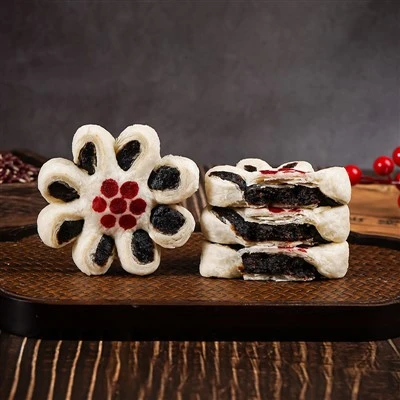
Let’s start with one of the most well – known ones, the Suzhou – style mooncakes with marmalade. These mooncakes have a long history. The crust is super flaky. When you take a bite, it just crumbles in your mouth. The marmalade used in these mooncakes is often made from local fruits. For example, they might use oranges or tangerines that are grown in the nearby orchards. The sweet and tangy flavor of the marmalade is a perfect match for the buttery crust. It’s not too sweet, which is great because it won’t make your teeth ache after a few bites. These mooncakes are usually round, symbolizing unity and togetherness, and they’re often eaten during the Mid – Autumn Festival. But you know what? They’re so good that people enjoy them all year round.
Another classic is the Cantonese – style pineapple buns with marmalade. Now, don’t be fooled by the name. They don’t actually have pineapple in the traditional sense. The "pineapple" part refers to the crispy, cracked crust on top that looks like the skin of a pineapple. Inside, the soft bun is filled with a delicious marmalade. It could be made from a blend of different fruits, like apricots and peaches. The contrast between the crunchy top and the soft, sweet – filled interior is just amazing. These buns are a staple in many Cantonese bakeries. You can find them in the morning as a breakfast item, paired with a cup of hot tea. They’re also great for an afternoon snack when you need a little pick – me – up.
I also wanna mention the Beijing – style daifushou with marmalade. Daifushou is a pastry that has a long, roll – like shape. The outer layer is made from a kind of soft, doughy pastry. And the marmalade filling gives it that extra oomph. It might be made from mulberries, which are quite abundant around Beijing in certain seasons. Mulberry marmalade has a unique, earthy – sweet flavor. Eating a daifushou with mulberry marmalade is like taking a bite of the traditional Beijing autumn. It’s a pastry that’s both delicious and has a lot of cultural significance.
Now, let’s talk about how these pastries are made. Making traditional Chinese pastries with marmalade filling is an art. First off, the dough. The dough for each style has its own special recipe. For the Suzhou – style mooncakes, the dough is often made with a combination of flour, oil, and water, and it’s kneaded until it’s smooth and elastic. The key is to get the right ratio of ingredients so that the crust will be flaky.
When it comes to the marmalade, the process is also very detailed. The fruits are carefully selected, usually at the peak of their ripeness. They’re washed, peeled, and then cooked down with sugar and sometimes a little bit of lemon juice to add some acidity. The cooking process has to be monitored closely, stirring constantly to make sure the marmalade doesn’t burn and to get the right consistency. It should be thick enough to hold its shape inside the pastry but still soft and spreadable.
After the dough and the marmalade are ready, it’s assembly time. For the mooncakes, a small ball of dough is flattened, and a spoonful of marmalade is placed in the center. Then, the dough is carefully wrapped around the marmalade, and the edges are pinched together. The ball is then rolled into a round shape and placed in a mooncake mold. The mold gives the mooncake its beautiful pattern.
For the pineapple buns, the dough is shaped into a bun, and a layer of the "pineapple" crust dough is placed on top. The bun is then proofed again until it doubles in size, and the marmalade is injected into the center after baking.
As a supplier of these traditional Chinese pastries, I take a lot of pride in what I do. I work with local farmers to source the freshest fruits for the marmalade. This ensures that the flavor is as authentic and delicious as possible. I also have a team of experienced bakers who have been making these pastries for years. They follow the traditional recipes, but they also add a little of their own touch to make them even better.
If you’re a restaurant owner, a cafe manager, or just someone who loves traditional Chinese pastries and wants to buy in bulk, I’d love to talk to you. These pastries are a great addition to any menu. They can attract new customers who are interested in trying something different and unique. And if you’re hosting an event, like a Chinese – themed party or a cultural festival, these pastries with marmalade filling will definitely be a hit.
So, if you’re interested in purchasing our traditional Chinese pastries with marmalade filling, don’t hesitate to reach out. We can discuss the different types of pastries, the quantities you need, and the pricing. I’m always happy to work with customers to find the best solution for their needs.
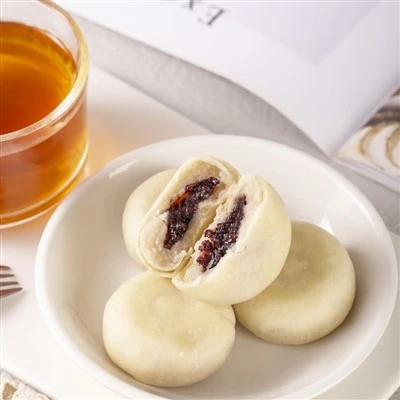
In conclusion, traditional Chinese pastries with marmalade filling are a wonderful part of Chinese food culture. They combine the delicious flavors of fruits with the artistry of pastry – making. Whether it’s the flaky mooncakes, the crispy – topped pineapple buns, or the soft daifushou, each one has its own story and charm. And as a supplier, I’m eager to share these amazing treats with more people. So, let’s get in touch and bring these traditional pastries to your place!
Baked Pastries References:
- "Chinese Pastry Culture: A Comprehensive Guide" by Li Ming
- "Traditional Cantonese Baked Goods" by Chen Mei
- "Suzhou’s Culinary Heritage: Pastries and More" by Zhang Wei
Fujian Luchen Food Co., Ltd.
As one of the most professional traditional chinese pastries manufacturers and suppliers in China since 1986, our products have good reputation in the market. Please feel free to wholesale bulk delicious traditional chinese pastries from our factory. Good service and quality products are available.
Address: No. 19, Shangxipulou, Nansheng Town, Pinghe County, Zhangzhou City, Fujian Province
E-mail: service@xmnahan.com
WebSite: https://www.luchenbakery.com/
